
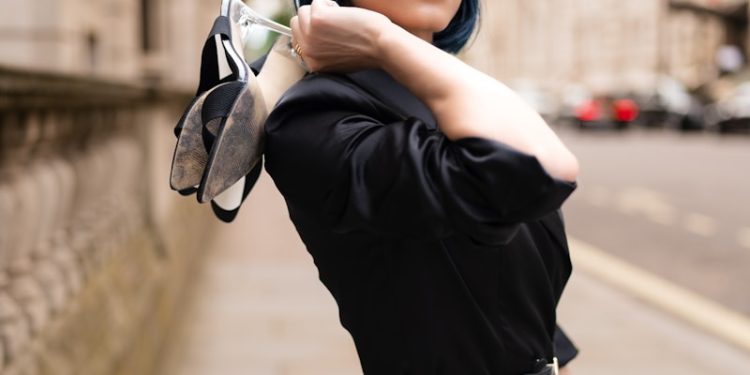
There is a rhythm to Paris unlike any other city in the world. It pulses through cobbled streets, echoes from ornate balconies, and glides down gilded runways inside timeworn salons. At its heart lies a world shaped not only by silk and stitches, but by artistry, rebellion, and reinvention. Parisian couture houses are more than fashion institutions—they are custodians of an aesthetic legacy that continues to define luxury, influence global trends, and challenge the very idea of what fashion can be.
To understand the legacy of Parisian couture is to first understand what “couture” truly means. It’s a term that’s often misused today, slapped onto mass-produced pieces to imply elegance. But haute couture is a protected label in France, governed by the Chambre Syndicale de la Haute Couture, a regulatory body that ensures the preservation of tradition and craftsmanship. To qualify, a house must create custom-fitted clothing, maintain a Paris atelier with a minimum number of staff, and present a new collection each season.
This commitment to excellence is not just about clothing; it is about devotion to a centuries-old ideal. The early couturiers were not mere designers—they were visionaries. Charles Frederick Worth, often regarded as the father of haute couture, established the template in the 19th century, blending art and commerce by presenting seasonal collections to elite clients in a salon setting. He transformed the seamstress into the auteur.
From there, Parisian couture flourished. In the 20th century, names like Coco Chanel, Christian Dior, and Yves Saint Laurent didn’t simply make garments; they rewrote the cultural playbook. Chanel liberated women from corsets with her jersey knits and boyish silhouettes, linking elegance with ease and strength. Dior, emerging post-WWII, offered the world his “New Look,” with nipped waists and full skirts—a counterpoint to wartime austerity that reasserted Paris as the capital of style. Saint Laurent blurred the lines between masculine and feminine, between art and fashion, daring the world to look at clothing differently.
Yet beyond the legacy of individual designers lies something more enduring: a way of making fashion that prioritizes craft, concept, and cultural relevance. Couture garments are hand-sewn by skilled artisans—les petites mains—who often spend hundreds of hours on a single piece. These are not just clothes; they are moving sculptures, meant to be admired, examined, and ultimately, lived in.
Couture has always been aspirational. Few can afford it, but millions are influenced by it. The silhouettes, techniques, and even spirit of haute couture ripple through ready-to-wear, fast fashion, editorial shoots, and red carpets. What appears outlandish on the Paris runway one season will often be translated into accessible form by high street retailers the next. Couture dictates mood more than market share.
This interplay between the exclusive and the mainstream is part of what keeps Parisian houses relevant. In a digital age where trends are born and buried overnight, the couture process—slow, precise, narrative-driven—offers a counterbalance. There is growing appreciation, particularly among younger generations, for authenticity and artisanship. Ironically, in an age of artificial intelligence and instant gratification, the slow, human touch of couture feels radical.
Of course, Parisian couture has had to evolve to survive. Many of the great houses from the 20th century have changed hands or shuttered entirely. The economics of haute couture are famously unkind—collections cost millions to produce and often yield no direct profit. But for the houses that remain—Chanel, Dior, Givenchy, Schiaparelli—couture is not just a business; it’s a beacon of identity. It draws celebrities, collectors, and cultural conversation. It keeps Paris at the center of the fashion world.
Newer creative directors have reinvigorated the legacy with fresh perspectives. Maria Grazia Chiuri at Dior brings feminist discourse into embroidery. Virginie Viard at Chanel balances respect for legacy with a more modern softness. Daniel Roseberry at Schiaparelli reinterprets surrealism for the Instagram age, fusing spectacle with symbolism. Each of them, in their own way, is building on the foundations laid by their predecessors—not by copying, but by conversing with the past.
This dialogue with history is central to the couture tradition. Parisian fashion is a palimpsest—each new designer writing over the traces of those who came before. You can’t show at couture week without acknowledging this weight. The Eiffel Tower and the Louvre are not the only landmarks in Paris; so are the ateliers tucked into quiet courtyards, where bolts of silk and trays of beads hold as much significance as any oil painting.
Moreover, the legacy of Parisian couture is not confined to Europe. Its influence is global. Fashion schools in Tokyo, New York, and London teach students about Parisian draping, cutting, and finishing. Hollywood stylists wait breathlessly for looks to be released, knowing they set the tone for awards season. Influencers might joke about “French girl fashion,” but beneath the clichés lies a genuine admiration for the precision and poise of Parisian style.
And still, the conversation around couture continues to expand. Modern couture houses are beginning to interrogate their exclusivity. Who gets to wear couture? Who is it made for? While couture clients have historically been white, wealthy, and Western, the demographic is shifting. Markets in the Middle East, Asia, and Africa have emerged as major patrons. Fashion weeks are becoming more diverse, both in terms of models and clientele. Representation, while far from perfect, is no longer ignored.
Technology, too, is entering the couture equation—not to replace craftsmanship but to augment it. 3D printing, digital embroidery, and virtual fittings are being explored as ways to innovate without compromising integrity. There is even talk of AI in design ideation, though the human eye remains irreplaceable in couture’s world of nuance and hand detail.
This fusion of old and new, tradition and experimentation, is exactly what makes Parisian couture so enduring. It is not a museum relic, preserved behind velvet ropes. It is a living art form—one that breathes, adapts, and provokes. It doesn’t seek to dress the masses but to move them, to spark conversation, and to maintain a certain standard that says: fashion can be more.
And that “more” matters. In a world awash in disposable clothing and overproduction, the existence of couture reminds us of value—not monetary value, but the value of time, care, and vision. It insists that fashion isn’t just what we wear, but how we express complexity, culture, and creativity.
The legacy of Parisian couture houses, then, isn’t just sewn into garments. It lives in the philosophy of making things well. It exists in a certain silhouette seen on a subway platform. It lingers in a young designer’s decision to hand-finish a seam. And it hums in the hearts of anyone who sees clothing not just as cover, but as craft.
In the final analysis, the legacy of these houses is not just about Paris. It’s about possibility. It’s about elevating fashion to the level of art, without ever forgetting that it’s meant to be worn, felt, and lived. That’s the magic of couture—and why its thread, though fine and rare, remains unbroken.









:extract_cover():upscale():fill(ffffff)/2024/07/31/789/n/44344577/8c8affc766aa7b047f7123.34513812_SKIMS-BRA-BA.webp)
:upscale()/2024/06/17/822/n/1922564/tmp_l8Drha_0e4c907e79dac791_IMG_6051.jpg)